About Mira Nagle

This author has not yet filled in any details.
So far Mira Nagle has created 14 blog entries.

How EOD Teams are Using Robotic Technology to Keep Divers Safe

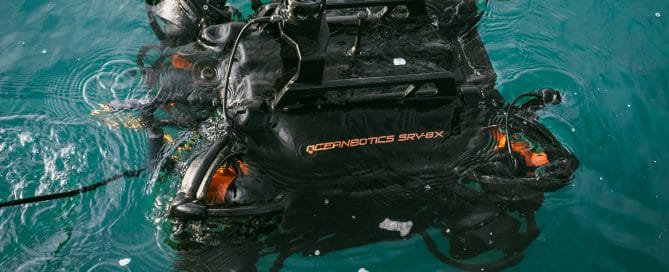
How EOD Teams are Using Robotic Technology to Keep Divers Safe Introduction Explosive Ordnance Disposal (EOD) teams undertake some of the most dangerous missions on the planet, expertly trained to locate and neutralize unexploded ordnances (UXOs) such as naval mines and underwater IEDs (improvised explosive devices). Naval mines are underwater explosives capable of devastating ships or submarines. Historically, these devices were deployed as wartime strategies to block enemy access to certain areas or funnel them into specific zones. Today, naval mines remain hidden along the ocean floor, posing significant risks to ocean operations and personnel. In this article, we’ll explore what naval mines are, how EOD teams work to safely eliminate them, and how advancements in technology are revolutionizing this process—making it faster, safer, and more efficient. What Are Naval Mines? A naval mine is a self-contained underwater explosive designed to damage or destroy submarines [...]

By |2025-11-20T09:44:07-08:00January 23rd, 2025|Blog, Landing, Uncategorized|Comments Off on How EOD Teams are Using Robotic Technology to Keep Divers Safe

From Pocket-Sized to Powerhouse: Know Your ROVs

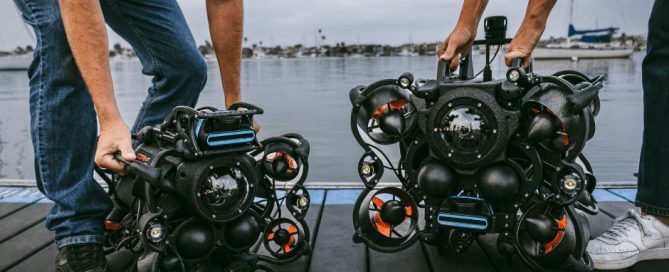
Remote Operated Vehicles (ROVs) have transformed underwater exploration by offering unmatched versatility and performance. This guide breaks down each ROV classe, highlighting their features, uses, and which one is best suited for your needs. Entry-Level ROVs Overview: The smallest and most affordable ROVs, are designed for hobbyists and beginners. These miniature vehicles are perfect for personal exploration and hobbyists. Payload: Minimal. Up to 2 kg. Deployment: <5 min, very easy. Battery: 1-2 hours. Depth: 150 m. Accessories: Basic cameras, lights. Applications: Hobbyist exploration. Basic visual inspections in shallow water. Recreational underwater photography. Mini/Portable ROVs Overview: These ROVs weigh under 40 pounds and are popular for their portability. They are ideal for more advanced hobbyists and professionals needing a compact, easy-to-deploy commercial ROV for tight spaces. Payload: 5 kg. Deployment: <10 min, quick and solo. Battery: 2-4 hours. Depth: 200 m. Accessories: Cameras, sonar, manipulators. Applications: Small-scale underwater inspections. Environmental monitoring and research. [...]

By |2025-04-23T09:34:28-07:00November 19th, 2024|Blog, Landing|Comments Off on From Pocket-Sized to Powerhouse: Know Your ROVs

Slash Inspection Times in Half with ROVs

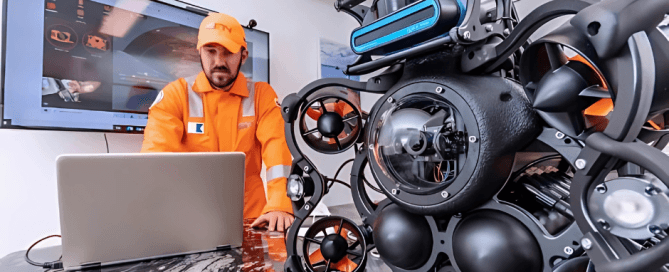
The future of subsea inspections is shifting towards advanced technologies like underwater ROVs (remotely operated vehicles), which are revolutionizing the oil and gas industry by overcoming the limitations of traditional inspection methods.   Prioritizing Safety ROVs provide a safer, faster, and more efficient way to inspect subsea pipelines and ship hulls. They can navigate harsh underwater conditions and hard-to-reach areas, reducing the risks to divers. Equipped with high-quality cameras, sonar, and sensors, ROVs offer real-time, high-definition data, enabling operators to identify hazards before sending divers into the water. This not only improves safety but also boosts operational efficiency and minimizes downtime. Long-Term Cost Savings Modern ROVs are also cost-effective. Their durability, long battery life, and ability to integrate various tools help streamline inspections, cutting down on equipment costs and labor. ROV accessories and add-ons, including multi-beam imaging sonar, USBL navigation, CP probes, UT probes, and other non-destructive testing tools, streamline operations. Faster [...]

By |2024-11-21T14:56:58-08:00November 19th, 2024|Blog, Landing|Comments Off on Slash Inspection Times in Half with ROVs

What is an ROV? And Why You Need One

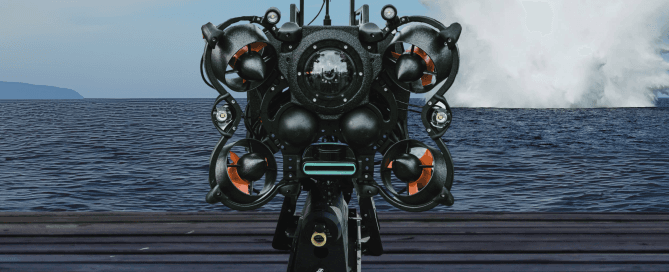
An underwater ROV, or "Remotely Operated Vehicle," is a cutting-edge underwater drone controlled remotely from the surface. These vehicles are revolutionizing industries by providing safer, more cost-effective, and highly efficient solutions for a wide range of underwater operations. From search and rescue (SAR) and defense missions to offshore maintenance, marine research, non-destructive testing, and data collection, ROVs are essential tools for professionals tackling underwater challenges. Designed to explore depths that often exceed hundreds of meters, ROVs are equipped with advanced cameras, sensors, and manipulator arms, allowing them to excel at complex tasks while streaming real-time data to operators on the surface. By minimizing risks and maximizing efficiency, this technology has become the first choice for professionals across a wide variety of markets. The Ultimate Solution for Safer, Cost-Effective, and Efficient Operations ROVs are transformative tools across various sectors: Safety First: By deploying an ROV first, operators can assess hazardous environments before sending [...]

By |2024-11-21T14:58:00-08:00November 19th, 2024|Blog, Landing|Comments Off on What is an ROV? And Why You Need One
Go to Top