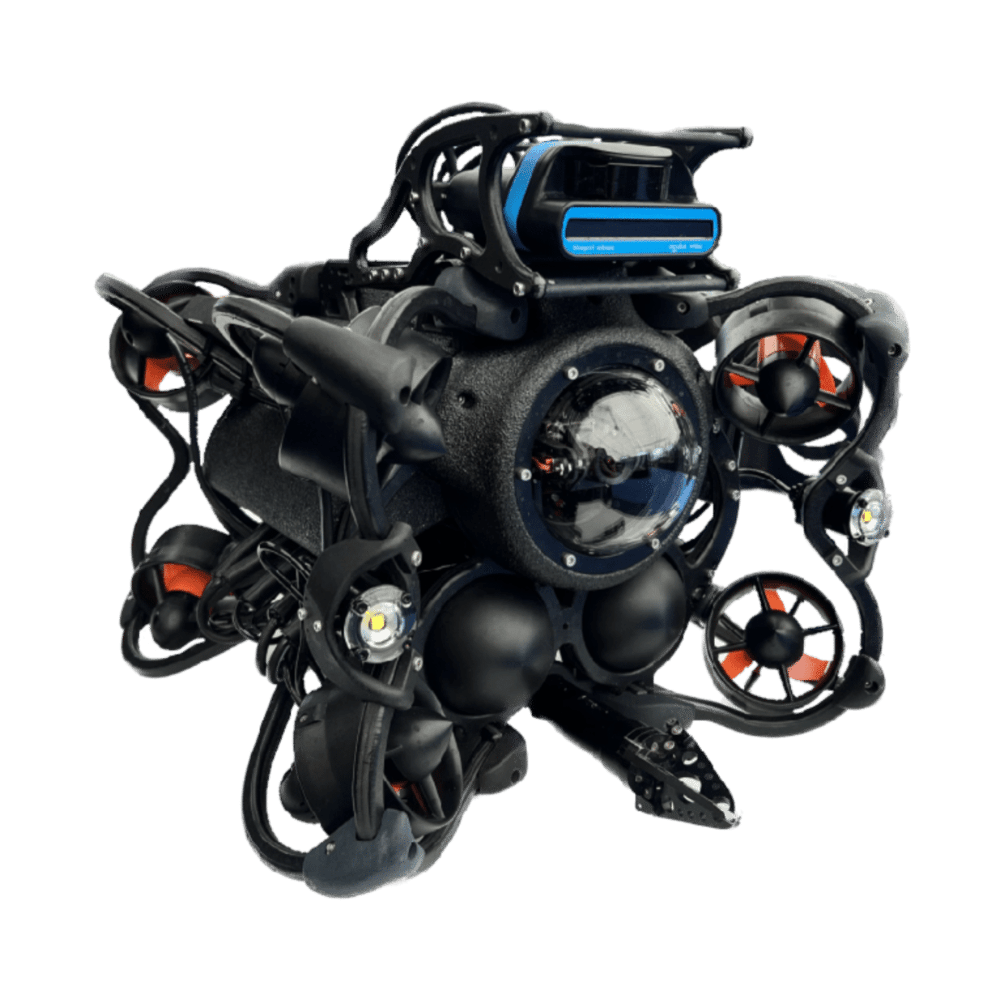
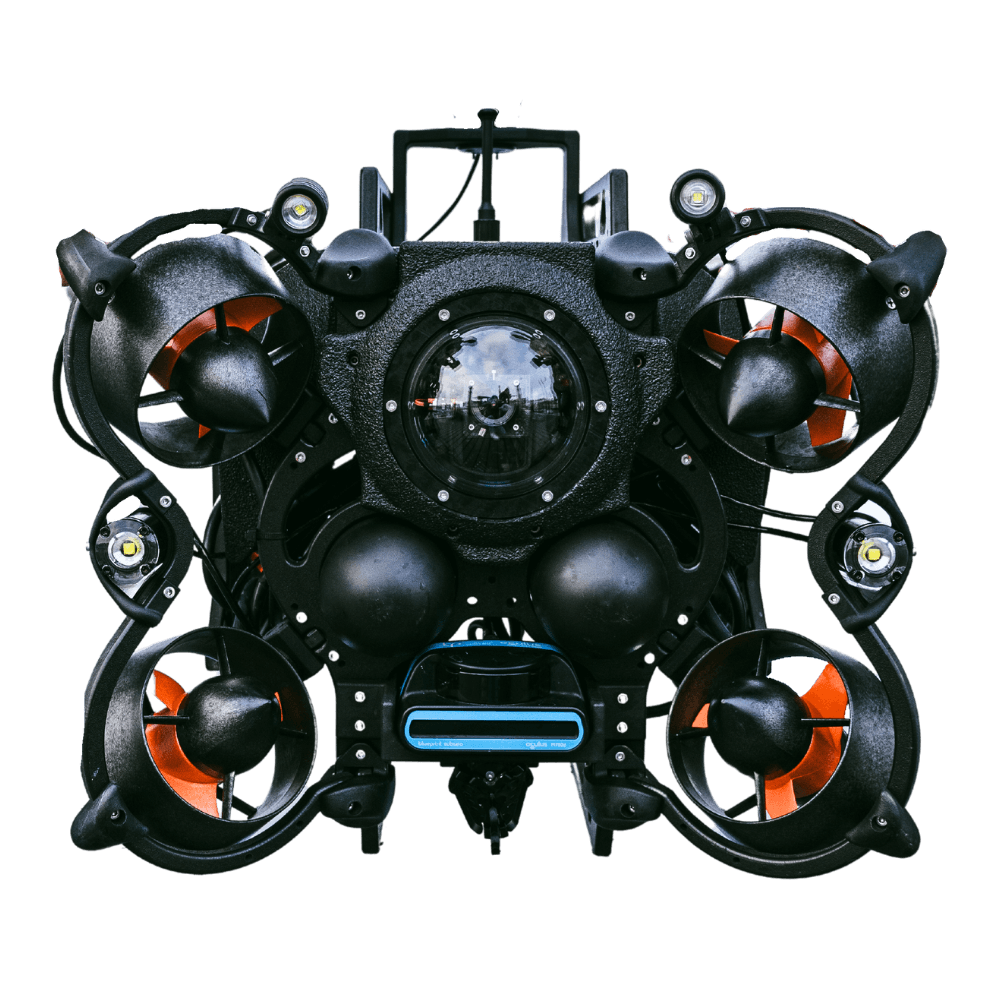
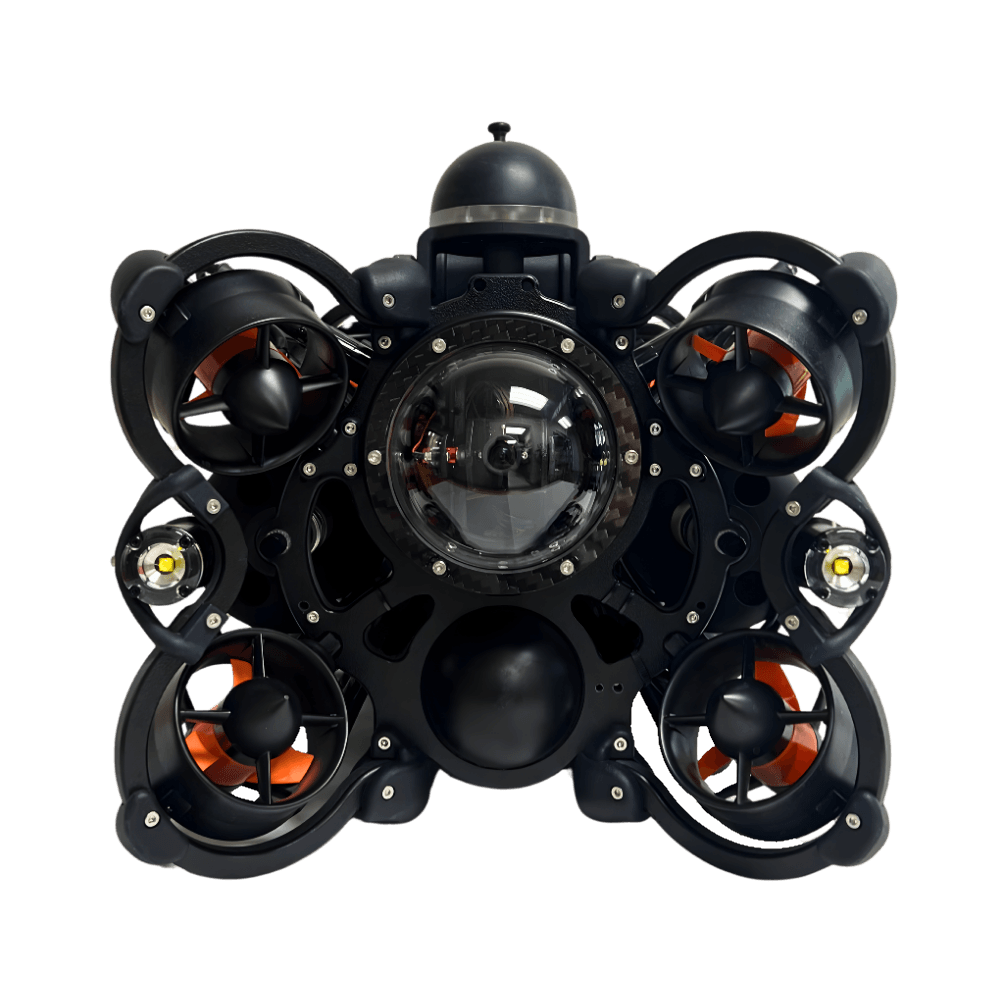
Meet the Doppler Velocity Log (DVL).
Lock in place and track your movements.
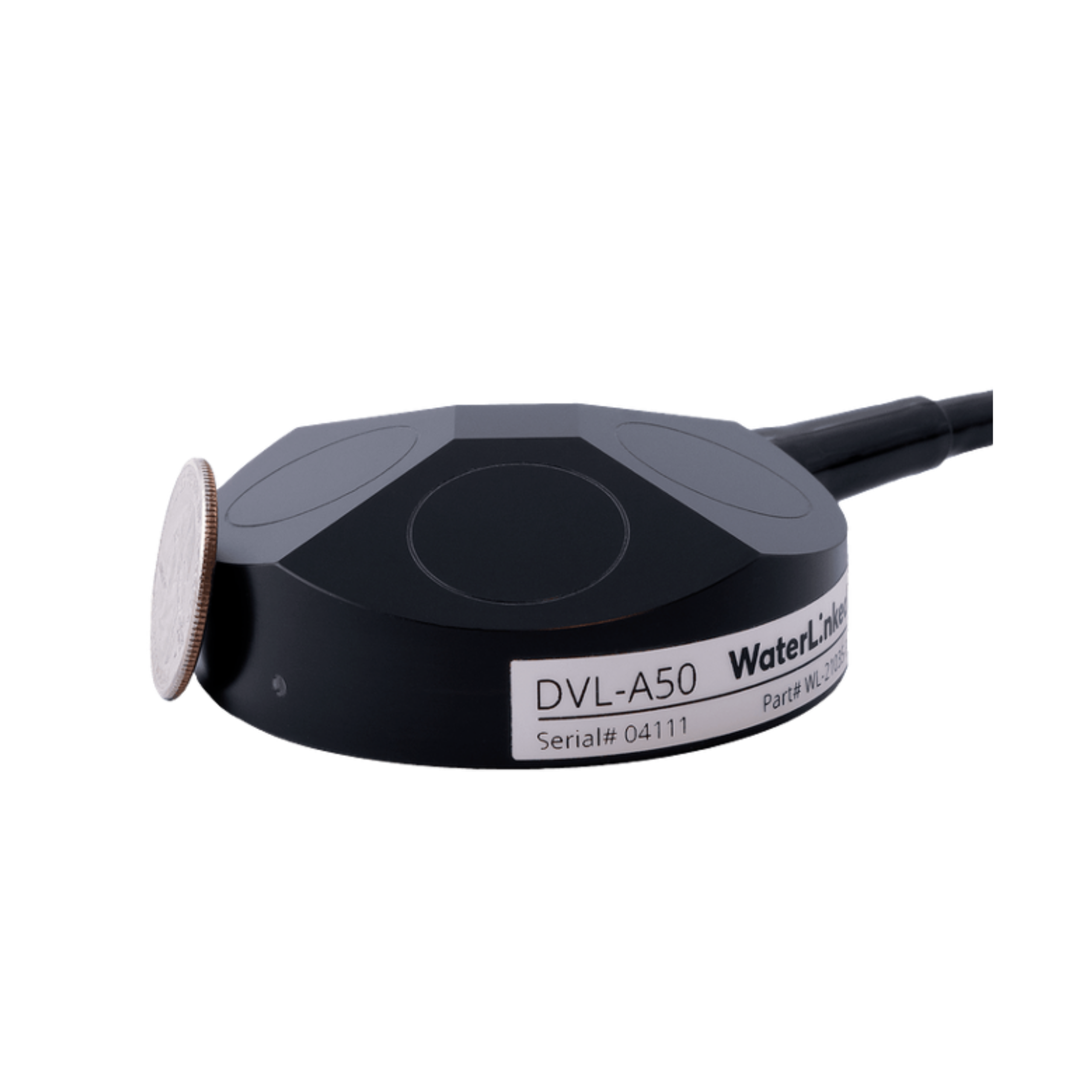
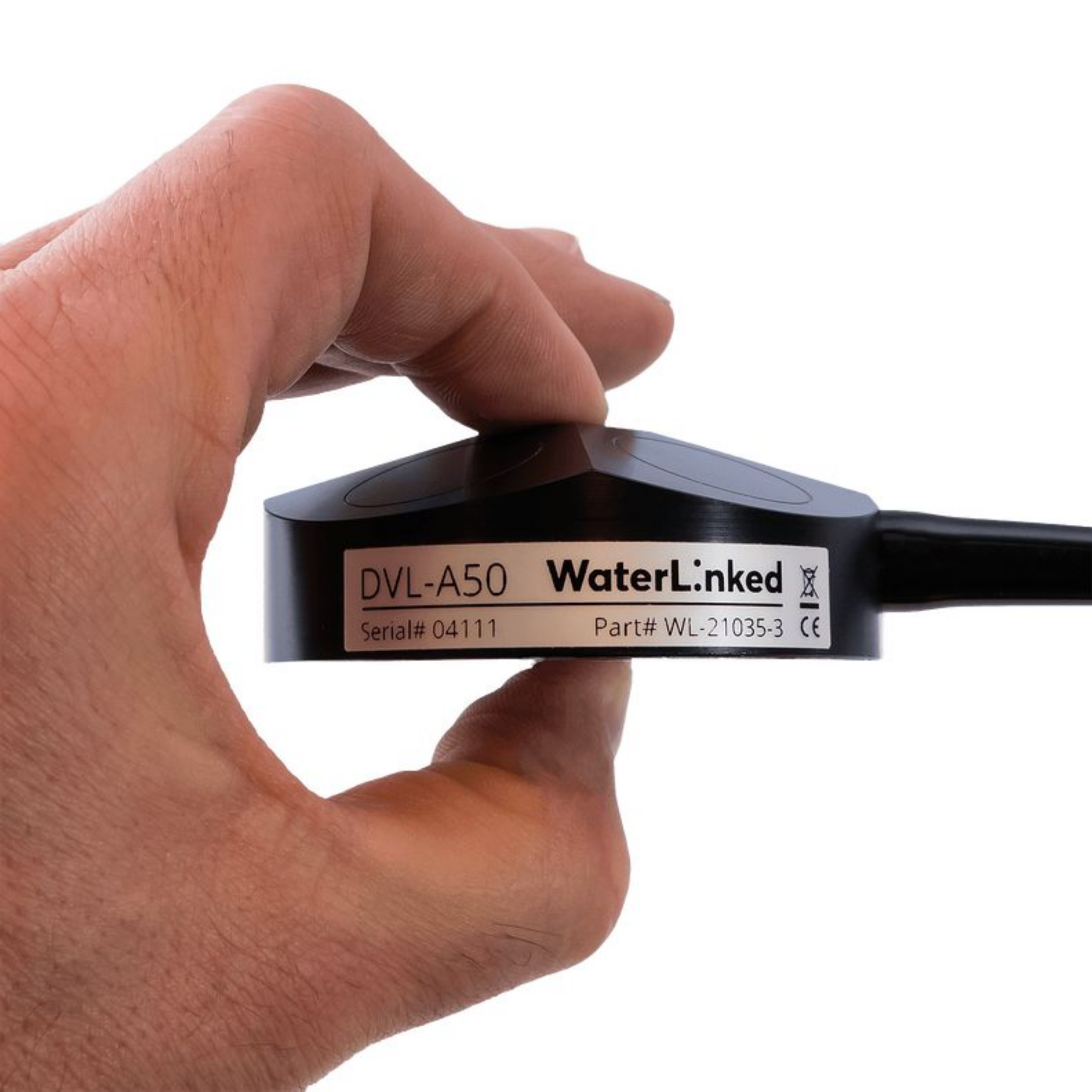
Doppler Velocity Log (DVL) for Oceanbotics ROVs
The Doppler Velocity Log (DVL) by Waterlinked transforms your ROV into a precision tool that can hold its position stable in the water column and track distance from the seafloor, enabling easy navigation.
Available Models
The DVL is a game-changer for ROV operations:
It Acts as an “Underwater Odometer”
Just like a car measures how far it has traveled by spinning wheels, the DVL measures movement relative to the seafloor using sound. This allows the ROV to calculate its precise speed and total distance traveled over the seabed.
Lock in Place & Stay Still (Station-Keeping)
With a DVL, the system detects even the slightest drift caused by a current and automatically compensates for it. This allows the ROV to “lock” onto a coordinate and hover perfectly still—essential for delicate tasks like inspections.
Navigation and Mapping
If you’re trying to create a map of where your ROV is going, you need to know exactly where you are at all times.
Without a DVL, you’re forced to guess your position based on how long you have been moving and in what direction. This leads to “drift,” which leads to inaccuracy.
With a DVL, the system knows exactly how fast it is moving over the seafloor, and it can plot a precise path. This ensures that the data you collect is accurately placed on a map.
How the DVL Operates: The 4-Step Process
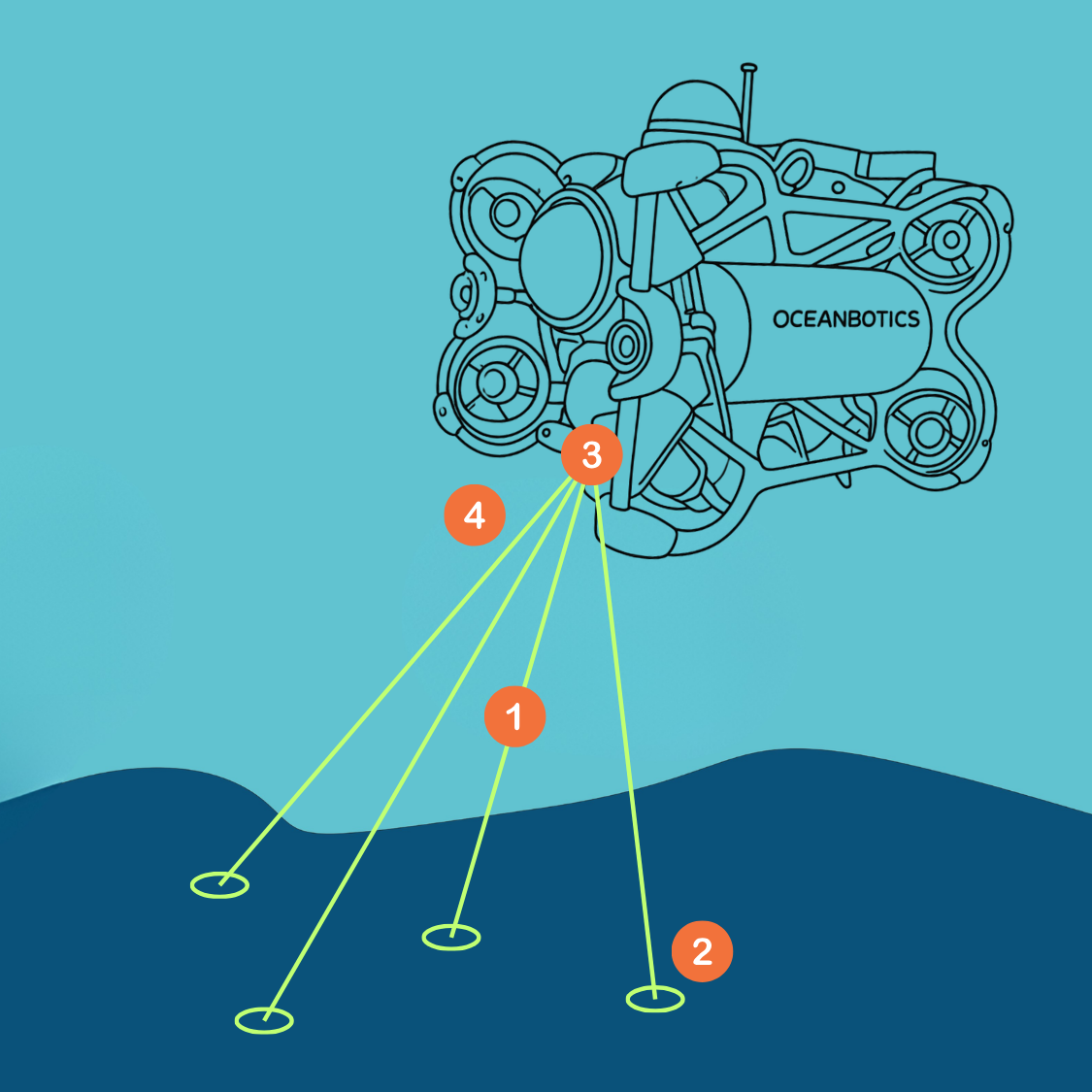
1. The DVL sends out four sound beams (pings) toward the ground below.
2. As those sound waves bounce off the seafloor, the DVL instantly “listens” and catches the returning echoes.
3. The onboard computer quickly crunches the data in three ways:
- Speed: It measures how the frequency of the echo changed to calculate exactly how fast the ROV is moving (The Doppler Effect).
- Distance: It times how long the sound took to make the round trip to determine how far the ROV is from the bottom (Altitude).
- Orientation: It combines this data with the IMU (which acts like a 3D compass and level) to track which way the ROV is tilted and facing.
4. By blending this information, the system gives the pilot a real-time, steady readout of the ROV’s exact speed and position, allowing for smooth, hands-off hovering.
Stop Fighting the Drift—Let Your DVL Take Control.
Fixed Position, Zero Drift.
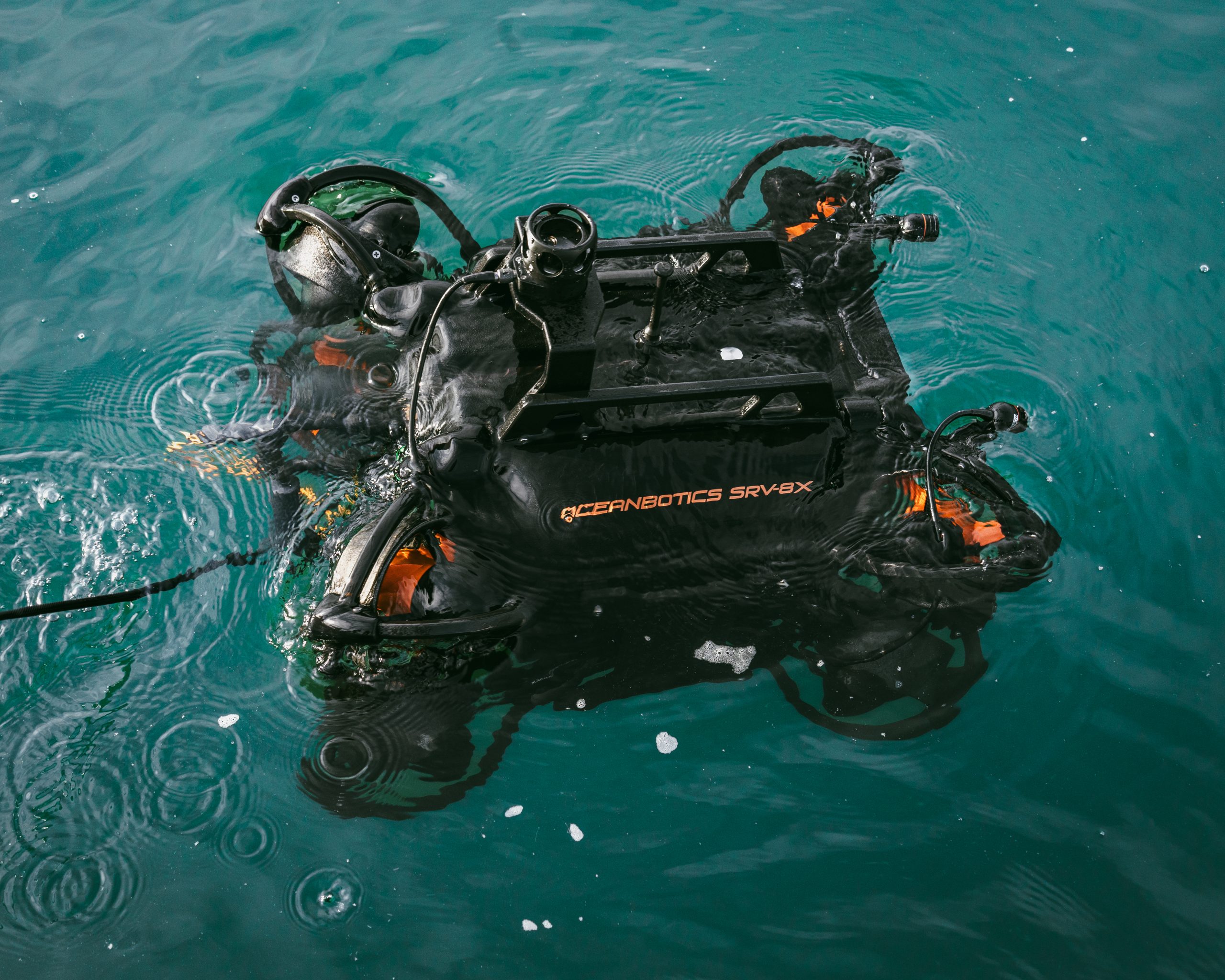
Three Core Functions of DVL
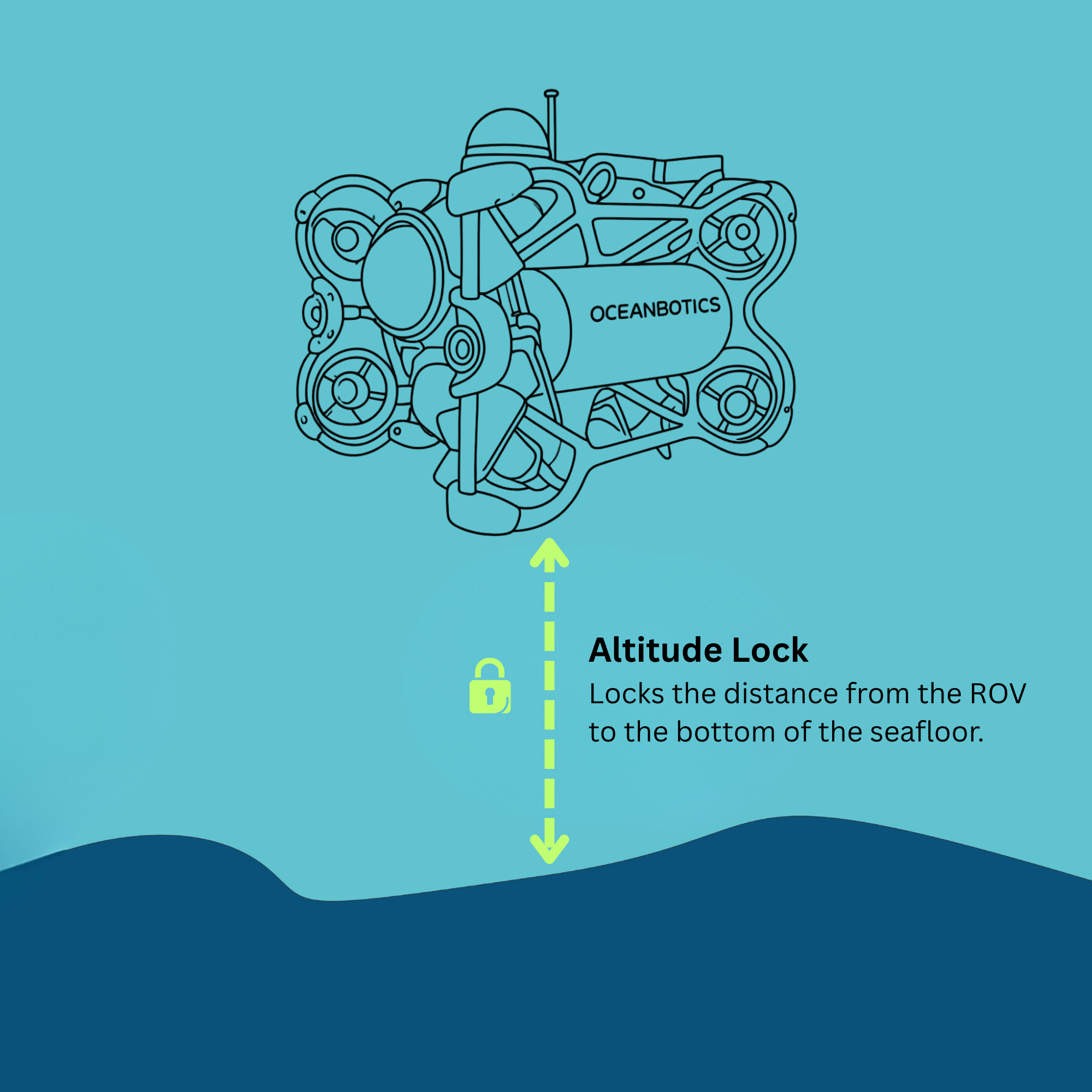
Altitude Lock
Locks the distance from the ROV to the bottom of the seafloor.
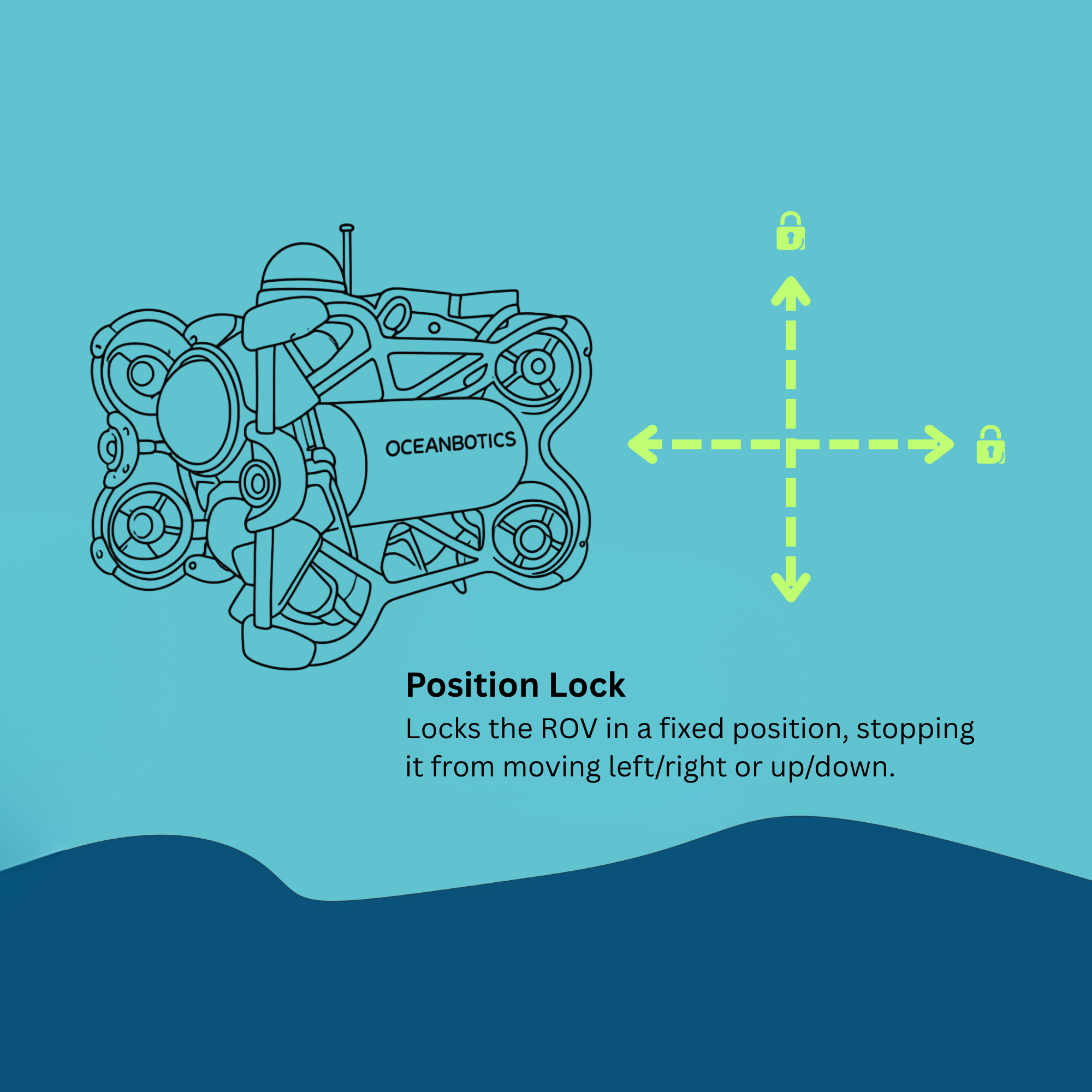
Position Lock
Locks the ROV in a fixed position, stopping it from moving left/right or up/down.
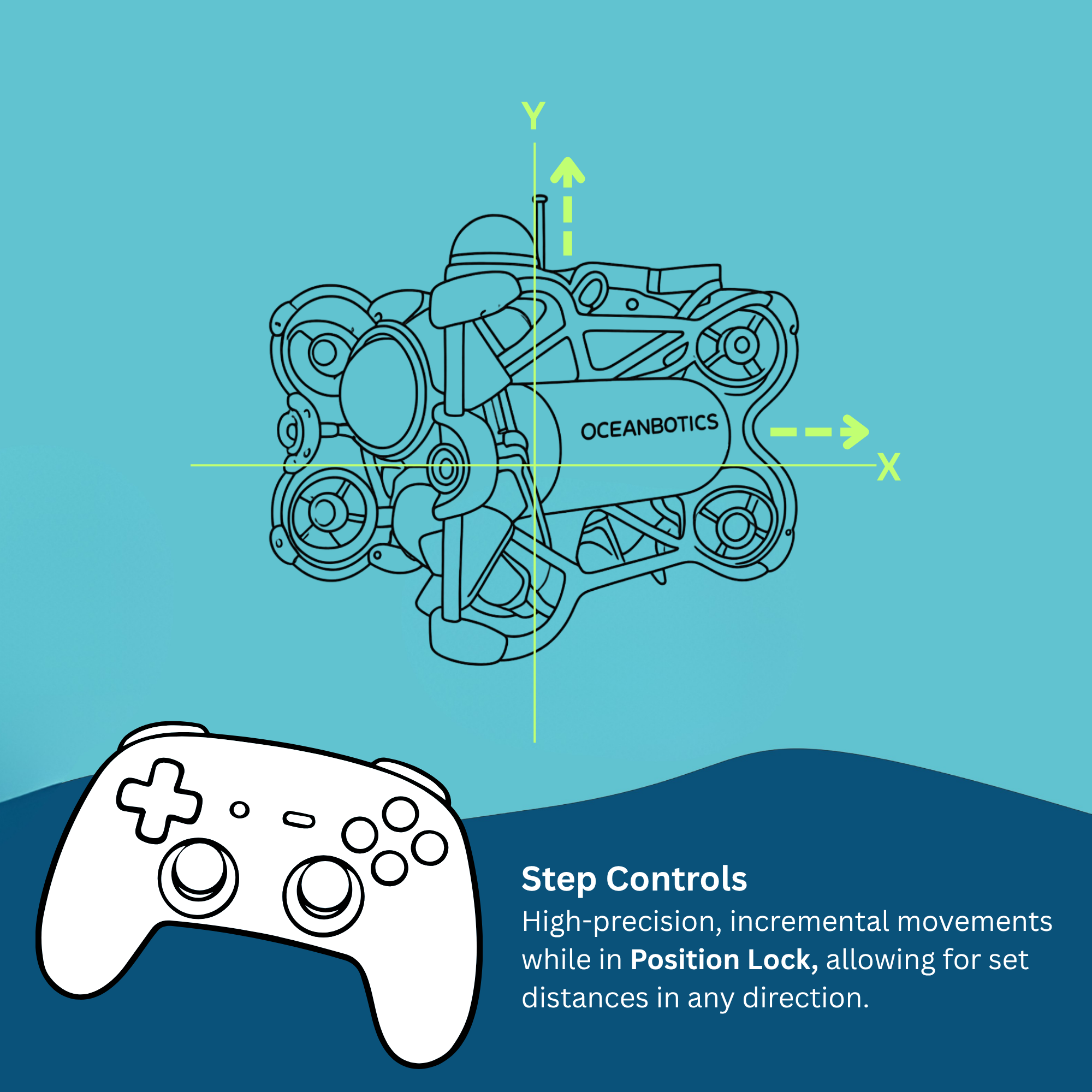
Step Controls
High-precision, incremental movements while in Position Lock, allowing for set distances in any direction.
Core Capabilities: Station-Keeping & Stability
Autonomous Station-Keeping
Automatically maintains a fixed geographic position by compensating for water currents, eliminating the need for constant manual corrections.
Active Thruster Feedback
Provides high-frequency, real-time velocity data directly to the vehicle, allowing the thrusters to make instantaneous adjustments for stability.
Dual-Reference Velocity
Simultaneously measures velocity relative to the seabed and the water column, ensuring reliability in various depths and conditions.
Drift Counteraction
Prevents unintended movement by maintaining a persistent “bottom lock,” even in dynamic or challenging underwater environments.
How to Use Stand-Alone Dead Reckoning Navigation
The Waterlinked DVL is capable of operating as a stand-alone navigation system, enabling Dead Reckoning for your underwater or surface vehicle without the need for additional external sensors.
How it Works
Dead Reckoning calculates your vehicle’s current position by continuously integrating your speed, heading, and time of travel, starting from a known reference point. This allows you to track your vehicle’s path and estimate its location in environments where GPS is unavailable.
Technical Specifications by Model
| Model | A50 | A100 | A125 | A250 |
|---|---|---|---|---|
| Depth Rating (m) | 300 or 600 | 1,000 | 1,000 or *4,000 | 1,000 or *4,000* |
| Minimum Altitude (m) | 0.05 | 0.05 | 0.05 | 0.3 |
| Maximum Altitude (m) | 50 | 100 | 125 | 250 |
| Diameter (mm) | 66 | 90 | 125 | 149 |
| Height (mm) | 25 | 34 | 30 | 40 |
| Weight in air (kg) | 0.17 | 0.2 | 0.75 | 1.65 |
| Weight in water (kg) | 0.1 | 0.125 | 0.5 | 0.75 |
| ROV Compatibility | All | All | All | All |
* 4,000m is side-entry only
How to Upgrade Your ROV with a DVL
The DVL is a plug-and-play accessory. Once it’s connected to your ROV via serial port & IP address, the DVL is fully integrated into SubNav OS software, allowing you to manage all data directly through your existing ROV controller for intuitive operation.
Contact us to upgrade your vehicle today.
Pair the Doppler Velocity Log with any Oceanbotics® ROV